Future Technology | Future Technology Trends | Emerging Technologies | Artificial Intelligence | Quantum Computing | Quantum Computing | Robotics and Automation | Internet of Things | Renewable Energy Technology | Future Innovations
Introduction
Technology is evolving faster than ever before. Every year, new inventions change the way people live, work, communicate, and learn. From Artificial Intelligence and robotics to smart cities and space exploration, future technology is expected to transform nearly every aspect of human life.
As we move deeper into the digital age, businesses, governments, and individuals are preparing for a future driven by innovation. Understanding future technology can help people stay informed, develop new skills, and take advantage of emerging opportunities.
In this article, we will explore the most exciting future technologies and how they may impact society in the coming years.
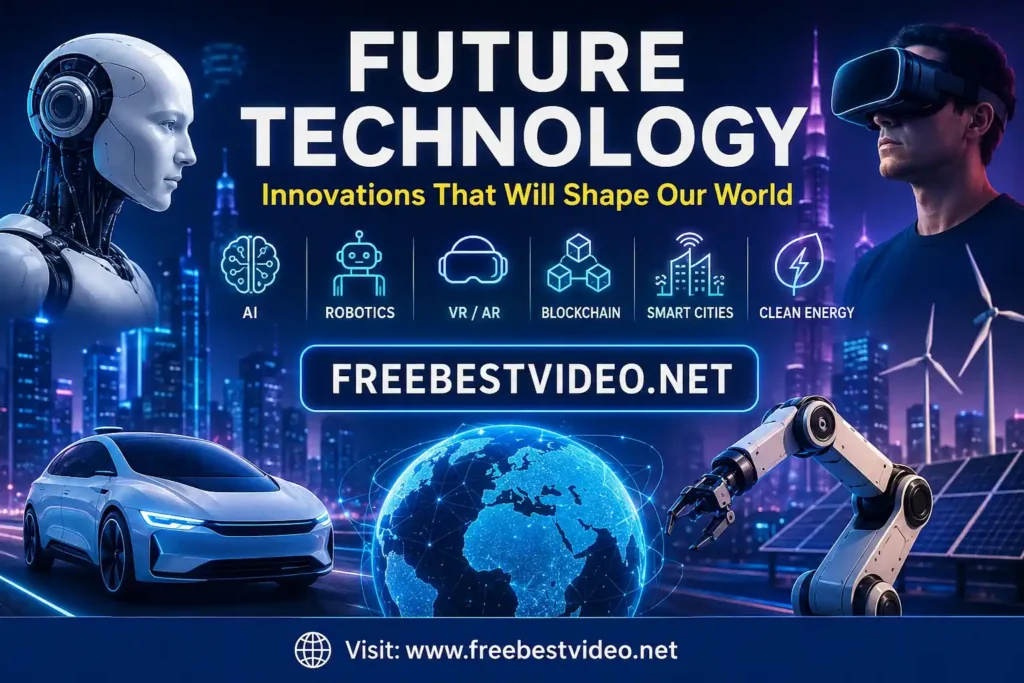
Artificial Intelligence (AI)
Artificial Intelligence is one of the most influential technologies of the future. AI systems can analyze data, solve problems, recognize patterns, and even generate content.
Today, AI is already used in smartphones, search engines, customer service, and healthcare. In the future, AI will become even more advanced and help automate repetitive tasks, improve decision-making, and enhance productivity.
Potential benefits of AI include:
- Faster business operations
- Improved healthcare diagnostics
- Personalized learning experiences
- Enhanced customer support
- Smarter transportation systems
AI is expected to play a major role in shaping the future economy and workforce.
Robotics and Automation
Robotics technology continues to advance rapidly. Modern robots can perform tasks with greater precision and efficiency than ever before.
Future robots may assist in:
- Manufacturing industries
- Healthcare facilities
- Agriculture
- Warehousing and logistics
- Home assistance
Automation can reduce operational costs and improve productivity. While some jobs may change because of automation, new career opportunities in technology, programming, and robot maintenance are also expected to emerge.
The Internet of Things (IoT)
The Internet of Things refers to a network of connected devices that communicate through the internet.
Examples include:
- Smart thermostats
- Smart security systems
- Connected vehicles
- Wearable fitness devices
- Smart home appliances
In the future, IoT technology will help create smarter homes and cities. Devices will work together to improve efficiency, reduce energy consumption, and provide greater convenience.
Smart Cities
Future technology will contribute to the development of smart cities. These cities will use sensors, data analytics, and connected infrastructure to improve urban living.
Features of smart cities may include:
- Intelligent traffic management
- Energy-efficient buildings
- Smart waste management
- Improved public transportation
- Enhanced public safety systems
Smart cities can help reduce pollution, improve resource management, and provide a better quality of life for residents.
5G and Advanced Connectivity
High-speed internet connectivity is essential for future innovation. The expansion of 5G networks is already improving communication speeds and network reliability.
Benefits of advanced connectivity include:
- Faster downloads and uploads
- Better video streaming
- Improved remote work experiences
- Enhanced online education
- Support for smart devices and autonomous systems
Future generations of wireless technology may provide even faster and more reliable internet access worldwide.
Virtual Reality and Augmented Reality
Virtual Reality (VR) and Augmented Reality (AR) are transforming entertainment, education, and business applications.
VR creates immersive digital environments, while AR overlays digital information onto the real world.
Future applications may include:
- Virtual classrooms
- Interactive training programs
- Advanced gaming experiences
- Virtual tourism
- Enhanced workplace collaboration
These technologies can improve learning, communication, and user engagement across many industries.
Healthcare Technology
Healthcare is expected to benefit significantly from future technological advancements.
Emerging healthcare innovations include:
- AI-powered medical diagnostics
- Remote patient monitoring
- Wearable health devices
- Robotic surgery
- Personalized medicine
Technology can help doctors identify diseases earlier, improve treatment outcomes, and increase access to healthcare services.
As healthcare technology continues to evolve, patients may experience more accurate diagnoses and better overall care.
Renewable Energy Solutions
Future technology is also focused on sustainability and environmental protection.
Renewable energy technologies include:
- Solar power
- Wind energy
- Energy storage systems
- Smart power grids
- Electric vehicles
Advancements in renewable energy can reduce dependence on fossil fuels and help combat climate change.
Many countries are investing heavily in clean energy solutions to build a more sustainable future.
Space Exploration and Innovation
Space technology is advancing rapidly. Governments and private companies are investing in missions to explore the Moon, Mars, and beyond.
Future developments may include:
- Advanced spacecraft
- Space tourism
- Lunar research stations
- Deep-space exploration
- Satellite-based communication systems
Space innovation often leads to new technologies that can also benefit life on Earth.
Quantum Computing
Quantum computing is considered one of the most revolutionary future technologies.
Unlike traditional computers, quantum computers can process complex calculations at extraordinary speeds.
Potential applications include:
- Scientific research
- Drug discovery
- Financial modeling
- Cybersecurity
- Climate simulations
Although still in development, quantum computing has the potential to solve problems that are currently impossible for conventional computers.
Challenges of Future Technology
While future technology offers many benefits, it also presents challenges.
Some concerns include:
- Data privacy issues
- Cybersecurity threats
- Ethical use of AI
- Job displacement due to automation
- Digital inequality
Governments, businesses, and technology leaders must work together to ensure innovation is used responsibly and benefits society as a whole.
Conclusion
Future technology has the potential to transform the world in remarkable ways. From Artificial Intelligence and Quantum Computing to Robotics, Smart Cities, and Renewable Energy, these innovations are shaping the future of society.
While challenges such as cybersecurity, privacy, and ethical concerns must be addressed, the opportunities created by future technology are enormous. By embracing innovation responsibly, individuals and businesses can prepare for a smarter, more connected, and more sustainable future.
As technology continues to evolve, staying informed about emerging trends will be essential for success in the digital age.
Read More Other Information > Udise Pluss
2 thoughts on “Future Technology 2026: How Innovation Will Shape Our World”