Introduction
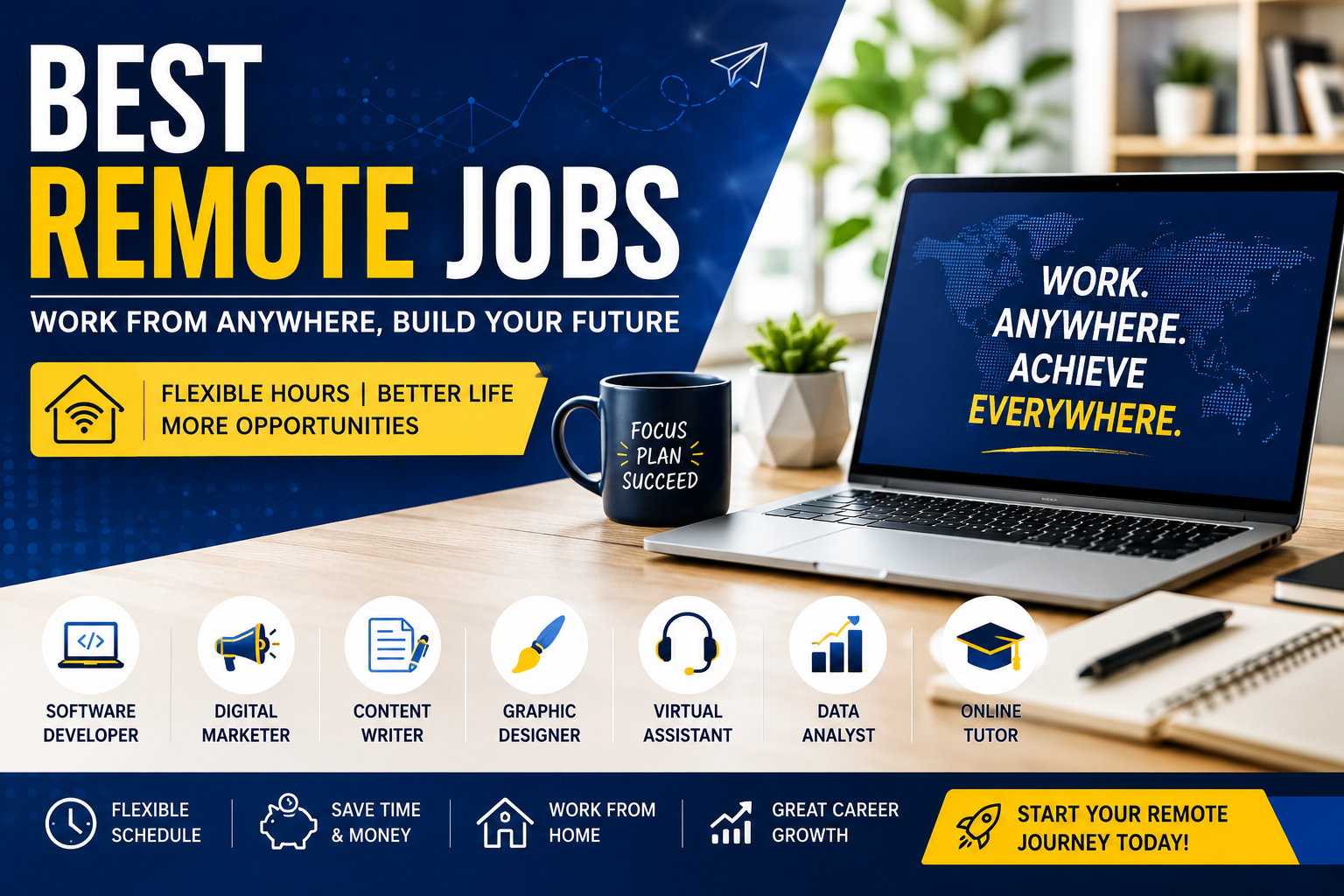
Remote work has become one of the biggest career trends in recent years, and it continues to grow in 2026. Companies across the world are hiring talented professionals without requiring them to work from an office. Whether you’re a student, a freelancer, a stay-at-home parent, or someone looking for a career change, remote jobs offer flexibility, better work-life balance, and access to global opportunities.
In this guide, you’ll discover the 15 Best part time Remote Jobs in 2026, including salary expectations, required skills, advantages, disadvantages, and the application process. The goal is to help you choose a remote career that matches your interests and long-term goals.
Why Remote Jobs Are Growing in 2026
Businesses now understand that remote employees can be just as productive as office workers. Improved collaboration tools, cloud software, and AI-powered workflows have made remote work easier than ever.
Benefits of remote work include:
- Flexible working hours
- No daily commuting
- Better work-life balance
- Access to international companies
- Opportunity to earn higher salaries
- Lower transportation and office expenses
If you have a laptop, internet connection, and the right skills, you can start building a successful remote career.
Quick Comparison Table
| Job Role | Average Annual Salary | Experience Level | Demand |
|---|---|---|---|
| Software Developer | $90,000–$160,000 | Intermediate | Very High |
| Digital Marketing Specialist | $55,000–$110,000 | Beginner | High |
| Content Writer | $40,000–$90,000 | Beginner | High |
| Graphic Designer | $50,000–$100,000 | Beginner | High |
| Virtual Assistant | $35,000–$70,000 | Beginner | High |
| Data Analyst | $70,000–$130,000 | Intermediate | Very High |
| Customer Support Representative | $35,000–$65,000 | Beginner | High |
| UX/UI Designer | $80,000–$140,000 | Intermediate | Very High |
| Online Tutor | $35,000–$90,000 | Beginner | Growing |
| Project Manager | $90,000–$150,000 | Experienced | Very High |
1. Software Developer
Software development remains one of the highest-paying part time remote jobs in 2026. Companies hire developers to create websites, mobile apps, cloud platforms, and enterprise software.
Average Salary
$90,000–$160,000 per year
Skills Required
- JavaScript
- Python
- Java
- React
- Node.js
- Problem-solving
- Git & GitHub
Pros
- Excellent salary
- Huge global demand
- Flexible work schedule
- Career growth opportunities
Cons
- Continuous learning required
- Long screen time
- Competitive interviews
How to Apply for a Remote Software Developer Job (Based on Real-World Experience)
Applying for a remote software developer job is not just about sending your resume to hundreds of companies. From the experience of many successful remote developers, the best results come from having a strong portfolio, relevant skills, and a customized application.
Here is a practical step-by-step approach:
1. Build Strong Programming Skills
Before applying, make sure you are comfortable with at least one programming language such as Python, JavaScript, Java, or C#. Learn popular frameworks related to your field, like React, Node.js, Django, or .NET.
2. Create Real Projects
Employers prefer candidates who can demonstrate practical work. Build projects like:
- A personal portfolio website
- E-commerce application
- Task management app
- Weather application using APIs
- Chat application
Upload your projects to GitHub and include live demo links whenever possible.
3. Prepare a Professional Resume
Keep your resume clean and ATS-friendly. Highlight:
- Technical skills
- Projects
- Work experience
- Certifications
- GitHub and LinkedIn profile
- Portfolio website
Customize your resume for every job instead of sending the same version everywhere.
4. Build an Online Presence
Recruiters often check candidates online. Maintain:
- An updated LinkedIn profile
- Active GitHub repositories
- Personal portfolio website
- Technical blog (optional but valuable)
This increases your credibility.
5. Apply on Trusted Part Time Remote Jobs Platforms
Some reliable websites include:
- LinkedIn Jobs
- Indeed
- Wellfound
- Remote OK
- We Work Remotely
- FlexJobs
- Toptal (for experienced developers)
Apply consistently instead of waiting for instant responses.
6. Write a Personalized Cover Letter
Avoid generic cover letters. Mention:
- Why you’re interested in the company
- Your relevant experience
- Projects that match the job description
- How you can contribute remotely
A personalized application often gets more attention.
7. Prepare for Technical Interviews
Most remote companies conduct online interviews. Practice:
- Data Structures & Algorithms
- Coding challenges
- System Design (for experienced roles)
- Problem-solving
- Communication skills
Use platforms like LeetCode, HackerRank, or Codewars for daily practice.
8. Demonstrate Remote Work Skills
Remote employers value candidates who can work independently. Mention skills such as:
- Time management
- Clear written communication
- Experience with Git, Slack, Jira, Zoom, and Trello
- Ability to meet deadlines without supervision
9. Follow Up Professionally
If you don’t hear back after 7–10 days, send a polite follow-up email expressing your continued interest. This shows professionalism without being pushy.
10. Stay Consistent
One of the biggest lessons from experienced remote developers is that consistency matters. It may take dozens of applications before receiving interviews. Continue improving your skills, updating your portfolio, and applying regularly.
Real-World Experience Tip
Many remote software developers receive their first offer not because they had years of experience, but because they showcased real projects and demonstrated problem-solving ability. A strong GitHub profile, an organized portfolio, and tailored applications often make a bigger impact than simply listing programming languages on a resume.
Pro Tip: Aim to submit 5–10 high-quality, customized applications each day rather than sending the same resume to hundreds of companies. Quality applications typically lead to better interview opportunities and higher response rates.
2. Digital Marketing Specialist
Digital Marketing Specialist is an ideal part time remote jobs. Businesses need digital marketers to increase online visibility, generate leads, and improve sales. This role continues to grow rapidly.
Average Salary
$55,000–$110,000 annually
Skills Required
- SEO
- Google Ads
- Facebook Ads
- Email Marketing
- Google Analytics
- Content Strategy
Pros
- Beginner friendly
- High freelance opportunities
- Flexible schedule
- Strong career growth
Cons
- Marketing trends change quickly
- Results take time
- Continuous learning required
How to Apply for a Remote Digital Marketing Job (Based on Real-World Experience)
Getting a remote digital marketing job is about proving that you can generate results, not just showing certificates. Most employers look for candidates who can demonstrate real marketing skills through campaigns, analytics, and practical experience.
1. Learn the Core Digital Marketing Skills
Before applying, understand the main areas of digital marketing, including:
- SEO (Search Engine Optimization)
- Content Marketing
- Social Media Marketing
- Google Ads (PPC)
- Email Marketing
- Google Analytics
- Basic Graphic Design using Canva
- AI tools for content creation and productivity
Focus on becoming strong in at least one specialization while having basic knowledge of the others.
2. Build Practical Experience
Employers want proof that you can deliver results. Start by:
- Creating your own blog or website
- Running a small social media page
- Optimizing content for SEO
- Managing marketing campaigns for a local business or personal project
- Tracking traffic and performance using Google Analytics
Even self-created projects can strengthen your portfolio.
3. Create a Professional Resume
Keep your resume simple and ATS-friendly. Include:
- Digital marketing skills
- Certifications
- Campaign experience
- SEO achievements
- Content writing samples
- Google Analytics or Google Ads knowledge
- Portfolio website or LinkedIn profile
Customize your resume according to each job description.
4. Build an Online Portfolio
A strong portfolio helps recruiters trust your skills. Include:
- SEO case studies
- Blog articles you’ve written
- Social media campaigns
- Marketing reports
- Website traffic improvements
- Email marketing examples
Showing measurable results makes your application much stronger.
5. Apply on Trusted Part Time Remote Jobs Platforms
Look for remote digital marketing jobs on:
- LinkedIn Jobs
- Indeed
- Wellfound
- Remote OK
- We Work Remotely
- FlexJobs
- Upwork (for freelance opportunities)
Apply regularly and tailor every application.
6. Write a Personalized Cover Letter
Avoid sending the same cover letter everywhere. Mention:
- Why you’re interested in the company
- Your relevant marketing experience
- Campaigns or projects you’ve worked on
- How your skills match the job requirements
A personalized cover letter can improve your chances of getting shortlisted.
7. Prepare for Marketing Interviews
Remote interviews often include practical questions. Be ready to explain:
- How you would improve website traffic
- SEO strategies you’ve used
- Social media campaign ideas
- Keyword research methods
- Google Ads basics
- Analytics and reporting
Employers appreciate candidates who think strategically and communicate clearly.
8. Showcase Remote Work Skills
Remote marketing roles require excellent communication and organization. Highlight your experience with tools like:
- Google Workspace
- Canva
- Google Analytics
- Google Search Console
- Slack
- Trello
- Asana
- Zoom
- Notion
These tools show you’re prepared for remote collaboration.
9. Follow Up Professionally
If you don’t receive a response within 7–10 days, send a short and polite follow-up email to express your continued interest. This demonstrates professionalism and enthusiasm.
10. Keep Learning and Improving
Digital marketing changes quickly. Continue learning about SEO updates, AI tools, content strategies, and advertising trends. Earning certifications and updating your portfolio regularly can help you stay competitive.
Real-World Experience Tip
Many successful remote digital marketers land their first job by showcasing real results instead of relying only on certifications. Even if you’ve never worked for a company, growing your own website, improving SEO rankings, increasing social media engagement, or running a small ad campaign can demonstrate your abilities. Employers value practical experience and measurable outcomes far more than theoretical knowledge.
Pro Tip: Instead of submitting hundreds of generic applications, send 5–10 customized applications every day, include links to your portfolio or successful projects, and explain how your skills can help the company achieve its marketing goals.
3. Content Writer
Content writing is an ideal part time remote jobs for people who enjoy researching and writing informative articles, blog posts, product descriptions, and website content.
Average Salary
$40,000–$90,000 annually
Skills Required
- English writing
- Research
- SEO
- Grammar
- WordPress
- AI content editing
Pros
- Work from anywhere
- Low startup cost
- Freelance opportunities
- Flexible hours
Cons
- Deadlines
- Writer’s block
- Income varies for freelancers
How to Apply for a Remote Content Writer Job (Based on Real-World Experience)
Getting a remote content writer job is more about your writing quality than your degree or years of experience. Most companies want writers who can create original, engaging, and SEO-friendly content that provides value to readers.
1. Improve Your Writing Skills
Before applying, practice writing different types of content, such as:
- Blog posts
- Product reviews
- How-to guides
- Website content
- News articles
- Buying guides
Focus on writing clear, informative, and reader-friendly content with proper grammar and formatting.
2. Learn Basic SEO
Many remote writing jobs require SEO knowledge. Learn the basics of:
- Keyword research
- On-page SEO
- Headings (H1, H2, H3)
- Meta titles and descriptions
- Internal linking
- Image optimization
- Writing for search intent
Knowing SEO will make you more valuable to employers.
3. Build a Writing Portfolio
A strong portfolio is one of the biggest factors in getting hired. Include:
- 8–10 high-quality blog articles
- SEO-friendly content samples
- Product reviews
- Informative guides
- Articles from your own website or guest posts
If you don’t have clients yet, write original articles on topics you’re interested in and publish them on your own blog or platforms like Medium.
4. Create a Professional Resume
Keep your resume simple and ATS-friendly. Highlight:
- Writing experience
- SEO knowledge
- Published articles
- Portfolio links
- Certifications (if any)
- AI tool experience (if relevant)
Always customize your resume for each job application.
5. Apply on Trusted Part Time Remote Jobs Platforms
Search for remote content writing opportunities on:
- LinkedIn Jobs
- Indeed
- Wellfound
- ProBlogger Job Board
- Remote OK
- We Work Remotely
- Upwork
- Fiverr (for freelance work)
Apply consistently and read each job description carefully before submitting your application.
6. Write a Personalized Cover Letter
Instead of using the same cover letter for every company, explain:
- Why you’re interested in the role
- Your writing experience
- Your SEO knowledge
- Links to your best writing samples
- How you can help the company create valuable content
A personalized cover letter often improves your chances of getting noticed.
7. Prepare for Writing Tests
Many companies ask applicants to complete a short writing assignment. Before applying, practice:
- Writing 800–1,500 word articles
- Following content briefs
- Using headings correctly
- Writing plagiarism-free content
- Meeting deadlines
Quality matters more than writing quickly.
8. Showcase Remote Work Skills
Remote content writers should demonstrate they can work independently. Mention your experience with tools like:
- Google Docs
- Microsoft Word
- Grammarly
- WordPress
- Google Search Console
- Canva (basic)
- ChatGPT or other AI tools for research and brainstorming
- Trello or Asana for task management
These tools show you’re ready for remote collaboration.
9. Follow Up Professionally
If you haven’t received a reply after 7–10 days, send a short and polite follow-up email. This shows professionalism and genuine interest in the position.
10. Keep Writing and Improving
The best content writers never stop learning. Read successful blogs, study SEO updates, improve your research skills, and write regularly. Every new article you publish strengthens your portfolio and increases your chances of getting hired.
Real-World Experience Tip
Many remote content writers get their first clients by publishing their own articles before they have professional experience. A portfolio with well-researched, original, and SEO-friendly content often impresses employers more than simply listing writing skills on a resume. Companies want writers who can communicate clearly, meet deadlines, and create content that genuinely helps readers.
Pro Tip: Submit 5–10 personalized applications every day, include links to your best writing samples, and focus on demonstrating the quality of your work. A strong portfolio and consistent applications usually lead to more interviews than sending the same resume to hundreds of companies.
4. Graphic Designer
Creative professionals can build a rewarding remote career by designing logos, social media graphics, websites, branding materials, and advertisements. Graphic Designer is an epic ideal part time remote jobs.
Average Salary
$50,000–$100,000 annually
Skills Required
- Adobe Photoshop
- Illustrator
- Figma
- Canva
- Branding
- Creativity
Pros
- Creative freedom
- High freelance demand
- Global clients
- Flexible work schedule
Cons
- Client revisions
- Competitive market
- Software costs
How to Apply for a Remote Graphic Designer Job (Based on Real-World Experience)
Landing a remote graphic designer job is less about having a formal degree and more about showcasing creativity, design skills, and a professional portfolio. Most employers hire designers based on the quality of their work rather than their educational background.
1. Master the Essential Design Skills
Before applying, become comfortable with industry-standard design tools such as:
- Adobe Photoshop
- Adobe Illustrator
- Adobe InDesign
- Figma
- Canva
- Adobe XD (optional)
Learn the basics of typography, color theory, branding, layout design, and visual hierarchy.
2. Build a Strong Portfolio
Your portfolio is the most important part of your application. Include a variety of design projects, such as:
- Logo designs
- Social media posts
- Business cards
- Flyers and brochures
- Website or app UI designs
- Banner ads
- YouTube thumbnails
- Brand identity projects
Even personal or practice projects can help if they demonstrate your creativity and design thinking.
3. Create a Professional Resume
Keep your resume clean, modern, and ATS-friendly. Highlight:
- Design software skills
- Portfolio website
- Freelance or professional experience
- Certifications
- Creative achievements
- Behance, Dribbble, or LinkedIn profile links
Tailor your resume to match the requirements of each job.
4. Build an Online Presence
Recruiters often review designers online before scheduling interviews. Create profiles on:
- Behance
- Dribbble
- Personal portfolio website
Regularly upload your latest projects to show that you’re active and improving your skills.
5. Apply on Trusted Part Time Remote Jobs Platforms
Search for remote graphic design jobs on:
- LinkedIn Jobs
- Indeed
- Wellfound
- Remote OK
- We Work Remotely
- FlexJobs
- Upwork
- Fiverr
Read each job description carefully and apply only to roles that match your skills.
6. Write a Personalized Cover Letter
Instead of sending the same message to every employer, explain:
- Why you’re interested in the company
- Your design experience
- The types of projects you’ve worked on
- How your creative skills can benefit their brand
Always include a link to your portfolio.
7. Prepare for Design Tests
Many employers ask candidates to complete a short design assignment. Practice:
- Designing within a brand guideline
- Creating social media graphics
- Designing marketing materials
- Meeting deadlines
- Explaining your design choices
Focus on both creativity and attention to detail.
8. Showcase Remote Work Skills
Remote designers need to collaborate effectively with clients and teams. Mention your experience with tools like:
- Figma
- Adobe Creative Cloud
- Canva
- Slack
- Zoom
- Trello
- Asana
- Google Drive
These tools demonstrate that you’re ready for remote teamwork.
9. Follow Up Professionally
If you don’t hear back within 7–10 days, send a polite follow-up email expressing your continued interest in the position. A professional follow-up can leave a positive impression.
10. Keep Improving Your Portfolio
Design trends evolve quickly, so continue learning new techniques and updating your portfolio with fresh work. Employers are more likely to hire designers who consistently improve their skills and showcase recent projects.
Real-World Experience Tip
Many successful remote graphic designers landed their first clients through a strong portfolio rather than years of experience. A collection of high-quality, original designs that demonstrate creativity, consistency, and problem-solving often impresses employers more than a long list of software skills. Even if you’re a beginner, creating professional mock projects can help you build credibility and attract opportunities.
Pro Tip: Apply to 5–10 carefully selected jobs each day, personalize every application, and always include your portfolio link. A well-presented portfolio with diverse design samples significantly increases your chances of getting interviews and securing remote graphic design roles.
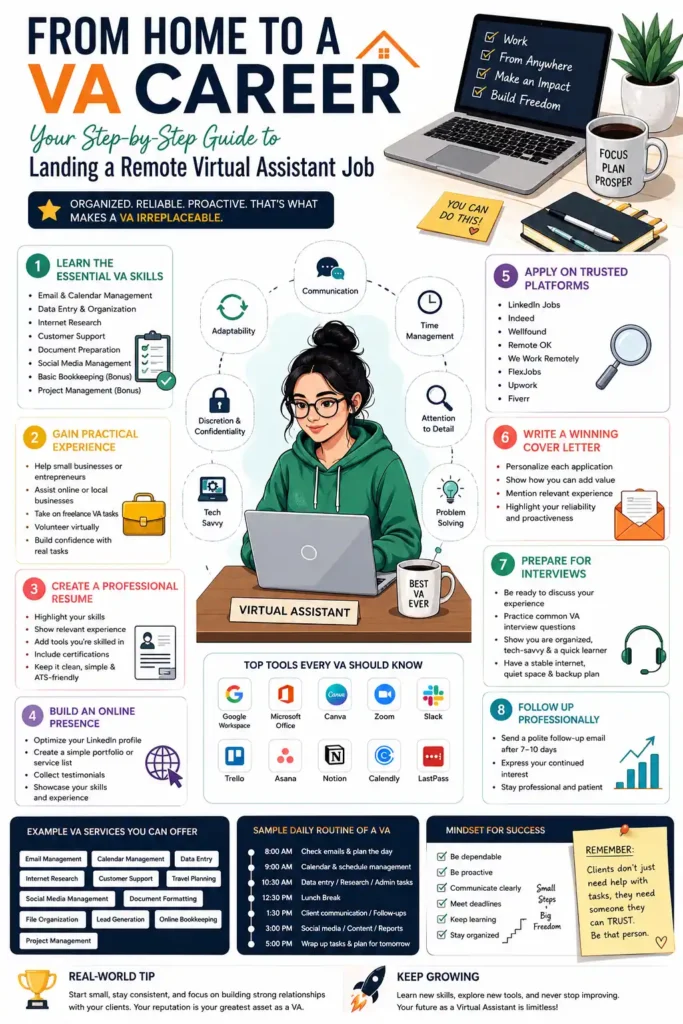
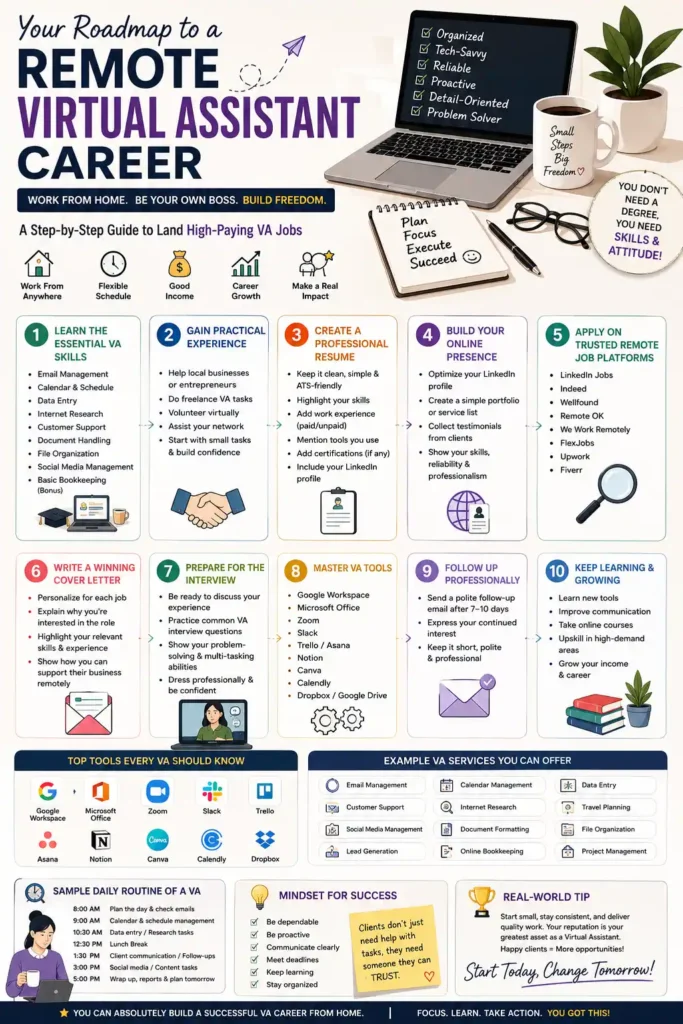
5. Virtual Assistant
Virtual assistants support businesses by managing emails, calendars, customer communication, scheduling meetings, and performing administrative tasks remotely.
Average Salary
$35,000–$70,000 annually
Skills Required
- Communication
- Microsoft Office
- Google Workspace
- Time management
- Organization
Pros
- Beginner friendly
- Flexible hours
- No advanced degree required
- Stable demand
Cons
- Repetitive tasks
- Multiple client management
- Time zone differences
How to Land a Remote Virtual Assistant Job: A Step-by-Step Guide (Based on Real-World Experience)
Getting hired as a remote Virtual Assistant (VA) is not just about answering emails or scheduling meetings. Companies look for reliable professionals who can stay organized, communicate effectively, and handle multiple administrative tasks independently. From real-world experience, the candidates who secure remote VA jobs usually have strong organizational skills, attention to detail, and a professional attitude.
1. Learn the Essential Virtual Assistant Skills
Before applying, make sure you’re comfortable with common administrative tasks, including:
- Email management
- Calendar scheduling
- Data entry
- Customer support
- Internet research
- Document preparation
- Basic bookkeeping (optional)
- Social media management (optional)
Strong communication and time management skills are equally important.
2. Gain Practical Experience
You don’t always need corporate experience to become a Virtual Assistant. Start by:
- Helping a small business manage emails
- Assisting friends or family with administrative work
- Managing your own schedules and documents
- Completing freelance VA projects
- Volunteering for online organizations
Even small projects can strengthen your resume.
3. Create a Professional Resume
Your resume should be simple, organized, and ATS-friendly. Include:
- Administrative skills
- Software proficiency
- Customer service experience
- Communication skills
- Relevant certifications
- LinkedIn profile (if available)
Customize your resume for each job application instead of using the same version every time.
4. Build a Professional Online Profile
Recruiters often check candidates online before hiring. Maintain:
- An updated LinkedIn profile
- A professional portfolio (if available)
- A clear list of your administrative skills
- Testimonials from previous clients or employers
A professional online presence builds trust.
5. Apply on Trusted Part Time Remote Jobs Platforms
Look for remote Virtual Assistant opportunities on:
- LinkedIn Jobs
- Indeed
- Wellfound
- Remote OK
- We Work Remotely
- FlexJobs
- Upwork
- Fiverr
Read every job description carefully and apply only to positions that match your skills.
6. Write a Personalized Cover Letter
Avoid sending a generic cover letter. Instead, explain:
- Why you’re interested in the company
- Your administrative experience
- Your organizational skills
- How you can support their daily operations remotely
A personalized application often receives more attention from recruiters.
7. Prepare for the Interview
Most employers conduct video interviews for remote VA positions. Be prepared to answer questions about:
- Managing multiple tasks
- Handling deadlines
- Communicating with clients
- Solving administrative problems
- Using productivity software
Clear communication and professionalism are key.
8. Showcase Your Remote Work Skills
Employers value Virtual Assistants who can work independently. Highlight your experience with tools like:
- Google Workspace
- Microsoft Office
- Zoom
- Slack
- Trello
- Asana
- Notion
- Calendly
- Dropbox
These tools demonstrate that you’re ready to collaborate in a remote environment.
9. Follow Up Professionally
If you haven’t received a response within 7–10 days, send a polite follow-up email to express your continued interest in the role. This shows professionalism and enthusiasm.
10. Continue Learning and Growing
The responsibilities of a Virtual Assistant can expand over time. Learning skills such as project management, CRM software, social media management, or basic bookkeeping can help you qualify for higher-paying remote opportunities.
Real-World Experience Tip
Many successful Virtual Assistants started with little or no formal experience. They built trust by being dependable, communicating clearly, and delivering work on time. Employers often value reliability, attention to detail, and problem-solving abilities more than years of experience. As you complete more projects and receive positive feedback, finding higher-paying remote VA jobs becomes much easier.
Pro Tip: Focus on sending 5–10 personalized applications every day, tailor your resume for each role, and emphasize your organizational and communication skills. Consistent, high-quality applications are far more effective than sending the same resume to hundreds of employers.
Tips for Getting a Part time Remote Jobs Faster
Finding remote work is easier when you prepare strategically.
- Build a professional LinkedIn profile.
- Create a strong online portfolio.
- Learn one in-demand digital skill.
- Improve your communication skills.
- Customize your resume for every application.
- Practice virtual interviews.
- Stay consistent and apply regularly.
Remote employers often value practical skills and real-world experience more than formal degrees, so focus on building projects and demonstrating your abilities.
6. Data Analyst
Data Analysts help companies make smarter business decisions by collecting, cleaning, and interpreting data. As organizations rely more on AI, automation, and business intelligence in 2026, skilled Data Analysts are in high demand across industries such as healthcare, finance, e-commerce, and technology. Most of the work is computer-based, making it an excellent remote career.
Average Salary
$70,000–$130,000 per year
Skills Required
- Microsoft Excel
- SQL
- Python or R
- Power BI
- Tableau
- Google Sheets
- Statistics
- Critical Thinking
- Data Visualization
Pros
- Excellent salary potential
- High demand across industries
- Opportunity to work with global companies
- Strong long-term career growth
- Possibility to move into Data Science or AI roles
Cons
- Requires analytical thinking
- Continuous learning is necessary
- Large datasets can be challenging
- Deadlines may become stressful
How to Apply ( Data Analysis Part Time Remote Jobs)
Start by learning Excel, SQL, and Power BI, as these are the most commonly requested skills in entry-level positions. Once you’re comfortable with the basics, complete real-world projects such as sales dashboards, customer analysis reports, or business performance dashboards. Upload these projects to GitHub or create an online portfolio showcasing your work.
Optimize your LinkedIn profile with keywords like Data Analyst, SQL, Power BI, and Python. Add certifications from recognized learning platforms to strengthen your profile. Tailor your resume for every application by highlighting measurable achievements and technical skills instead of simply listing software names.
Apply consistently on LinkedIn Jobs, Indeed, Glassdoor, FlexJobs, Remote OK, and company career pages. Before interviews, practice SQL queries, Excel functions, dashboard creation, and common analytical case-study questions. Employers value practical problem-solving abilities more than theoretical knowledge, so demonstrating real projects significantly increases your chances of getting hired.
7. Customer Support Representative
Customer Support Representatives assist customers through live chat, email, and phone calls. Many international companies now operate fully remote customer service teams, making this one of the easiest remote careers for beginners.
Average Salary
$35,000–$65,000 per year
Skills Required
- Communication
- Problem Solving
- CRM Software
- Email Support
- Live Chat
- Time Management
- Patience
Pros
- Beginner friendly
- No advanced technical degree required
- Stable demand
- Flexible schedules
- Opportunities for career advancement
Cons
- Shift work may be required
- Handling difficult customers
- Repetitive daily tasks
- Performance metrics are closely monitored
How to Apply (Customer Support Representative Part Time Remote Jobs)
Prepare a professional resume that highlights communication skills, teamwork, and customer service experience. Even if you don’t have direct experience, include volunteer work, internships, retail jobs, or freelance projects that demonstrate your ability to interact with people professionally.
Practice spoken English and written communication because many remote companies evaluate these skills during interviews. Familiarize yourself with customer support tools like Zendesk, Freshdesk, and Intercom, as basic knowledge of these platforms can improve your chances.
Search for remote customer support roles on LinkedIn, Indeed, We Work Remotely, Remote OK, and company websites. Before interviews, practice responding to common customer complaints professionally and calmly. Employers look for candidates who remain patient under pressure and can provide helpful solutions while maintaining a positive attitude.
8. UX/UI Designer
UX/UI Designers create user-friendly websites and mobile applications. Businesses invest heavily in improving user experience because better designs lead to higher customer satisfaction and increased sales.
Average Salary
$80,000–$140,000 per year
Skills Required
- Figma
- Adobe XD
- Wireframing
- Prototyping
- User Research
- Design Thinking
- Typography
- Color Theory
Pros
- Excellent earning potential
- Creative work
- High international demand
- Freelance opportunities
- Strong career progression
Cons
- Frequent client revisions
- Competitive field
- Requires continuous portfolio updates
- User research can be time-consuming
How to Apply (UX/UI Designer Part Time Remote Jobs)
Begin by learning Figma and understanding UX fundamentals such as user research, wireframing, and prototyping. Instead of creating random designs, redesign existing websites or mobile applications and explain your design decisions. Recruiters appreciate designers who can solve problems rather than simply create attractive interfaces.
Build a portfolio using Behance, Dribbble, or your personal website. Include case studies that explain your design process from research to final prototype. Keep your LinkedIn profile updated with your latest projects and certifications.
Apply for internships, junior UX/UI roles, and freelance projects to gain practical experience. During interviews, be prepared to discuss your design thinking process, explain user-centered decisions, and demonstrate how your designs improve usability. A strong portfolio usually has a greater impact than formal qualifications.
9. Online Tutor
Online education continues to expand in 2026. Students worldwide seek tutors for school subjects, programming, languages, mathematics, science, business, and professional certifications. This makes online tutoring one of the most flexible remote careers.
Average Salary
$35,000–$90,000 per year
Skills Required
- Subject Expertise
- Communication
- Presentation Skills
- Video Conferencing
- Lesson Planning
- Patience
- Time Management
Pros
- Flexible working hours
- Work from anywhere
- Rewarding career
- Low startup cost
- Opportunity to teach international students
Cons
- Income depends on student demand
- Different time zones
- Requires lesson preparation
- Peak teaching hours may vary
How to Apply
Identify the subjects in which you have strong expertise and prepare structured lesson plans. Create sample teaching videos to demonstrate your communication skills and teaching style. These videos help potential students evaluate your ability before booking classes.
Register on reputable tutoring platforms and complete your profile with qualifications, certifications, teaching experience, and introductory videos. If possible, collect reviews from your first students to build credibility.
Promote your tutoring services through LinkedIn and educational communities. During interviews or demo sessions, focus on explaining concepts clearly rather than showing advanced knowledge. Students and tutoring platforms value teachers who make learning simple, engaging, and interactive.
10. Project Manager
Project Managers coordinate teams, monitor deadlines, allocate resources, and ensure projects are completed successfully. With distributed teams becoming common, remote Project Managers are now essential in technology, healthcare, finance, marketing, and consulting companies.
Average Salary
$90,000–$150,000 per year
Skills Required
- Leadership
- Communication
- Agile Methodology
- Scrum
- Jira
- Trello
- Risk Management
- Budget Planning
- Team Coordination
Pros
- High salary
- Leadership opportunities
- Strong career growth
- High demand worldwide
- Work across different industries
Cons
- High responsibility
- Tight deadlines
- Team conflicts
- Pressure to deliver projects on time
How to Apply
Start by learning project management fundamentals and collaboration tools such as Jira, Trello, Asana, and Microsoft Project. If possible, earn certifications like CAPM, PMP, or Scrum Master to strengthen your resume, although practical experience is equally valuable.
Create a resume that highlights projects you have managed, measurable achievements, leadership experience, and problem-solving abilities. Employers prefer candidates who can demonstrate successful project delivery instead of simply listing responsibilities.
Optimize your LinkedIn profile with project management keywords and actively network with recruiters. Apply through company career pages and remote job platforms. Before interviews, prepare examples using the STAR (Situation, Task, Action, Result) method to explain how you handled deadlines, managed conflicts, reduced risks, and successfully delivered projects. Strong communication and leadership skills often make the biggest difference during the hiring process.
Remote Job Success Tips
After choosing your preferred remote career, focus on continuous improvement. Build a strong portfolio, update your resume regularly, earn relevant certifications, and stay active on professional networking platforms. Employers are increasingly looking for candidates who can demonstrate practical skills through real-world projects rather than relying only on academic qualifications.
Consistency is key. Even if you don’t receive interview calls immediately, continue learning, applying, and improving your profile. With persistence and the right strategy, a rewarding remote career is achievable in 2026.
11. Social Media Manager
Social Media Managers handle content planning, posting schedules, engagement, and brand growth across platforms like Instagram, Facebook, LinkedIn, X, and TikTok.
Average Salary
$50,000–$100,000 per year
Skills Required
- Content Strategy
- Canva
- Analytics
- Copywriting
- Community Management
- Scheduling Tools
Pros
- Creative work
- High freelance opportunities
- Flexible schedule
- Growing demand
Cons
- Content deadlines
- Algorithm changes
- Weekend engagement may be required
How to Apply
Create sample social media campaigns, grow a small page to demonstrate your skills, and build a portfolio showing content calendars, engagement reports, and analytics improvements. Apply on LinkedIn, Upwork, and agency websites.
12. Cybersecurity Analyst
Cybersecurity professionals protect organizations from hacking, data breaches, and cyber threats.
Average Salary
$95,000–$160,000 per year
Skills Required
- Network Security
- Ethical Hacking
- SIEM Tools
- Linux
- Risk Assessment
Pros
- Excellent salary
- Very high demand
- Strong job security
Cons
- Requires technical knowledge
- On-call responsibilities
- Continuous learning
How to Apply
Earn certifications such as CompTIA Security+, CEH, or CISSP. Build a home lab, practice security tools, and participate in ethical hacking platforms. Employers value practical security experience.
13. Cloud Engineer
Cloud Engineers manage cloud infrastructure using platforms such as AWS, Microsoft Azure, and Google Cloud.
Average Salary
$100,000–$170,000 per year
Skills Required
- AWS
- Azure
- Docker
- Kubernetes
- Linux
- Networking
Pros
- High salary
- Strong demand
- Future-proof career
Cons
- Steep learning curve
- Certification costs
- Complex troubleshooting
How to Apply
Start with AWS Cloud Practitioner or Azure Fundamentals certification. Create cloud projects such as deploying websites, databases, and scalable applications, then showcase them on GitHub.
14. AI Prompt Engineer
As AI tools become mainstream, companies need professionals who can create effective prompts and workflows for AI systems.
Average Salary
$80,000–$150,000 per year
Skills Required
- Prompt Design
- AI Tools
- Research
- Writing
- Workflow Automation
Pros
- Emerging field
- High salary potential
- Remote friendly
Cons
- Industry still evolving
- Skills change rapidly
- Limited standardized hiring process
How to Apply
Build case studies showing how your prompts improved productivity, content quality, customer support, or business workflows. Demonstrate measurable results.
15. Sales Development Representative (SDR)
SDRs generate leads, qualify prospects, and schedule meetings for sales teams.
Average Salary
$50,000–$120,000 per year (including commissions)
Skills Required
- Communication
- CRM Software
- Cold Emailing
- Prospecting
- Negotiation
Pros
- Performance bonuses
- Career growth into sales leadership
- Remote opportunities
Cons
- Sales targets
- Rejection from prospects
- Pressure to meet quotas
How to Apply
Practice cold outreach, learn CRM tools like Salesforce or HubSpot, and prepare role-play answers for sales interviews. Companies often hire candidates with strong communication skills even if they have limited experience.
Top 15 Part Time Remote Jobs Comparison
| Job | Salary Range |
|---|---|
| Software Developer | $90k–$160k |
| Digital Marketing Specialist | $55k–$110k |
| Content Writer | $40k–$90k |
| Graphic Designer | $50k–$100k |
| Virtual Assistant | $35k–$70k |
| Data Analyst | $70k–$130k |
| Customer Support Representative | $35k–$65k |
| UX/UI Designer | $80k–$140k |
| Online Tutor | $35k–$90k |
| Project Manager | $90k–$150k |
| Social Media Manager | $50k–$100k |
| Cybersecurity Analyst | $95k–$160k |
| Cloud Engineer | $100k–$170k |
| AI Prompt Engineer | $80k–$150k |
| Sales Development Representative | $50k–$120k |
Frequently Asked Questions
1. Which remote job is best for beginners?
Virtual Assistant, Customer Support Representative, and Content Writer are among the easiest remote careers to start with minimal experience.
2. Which remote job pays the highest?
Cloud Engineer and Cybersecurity Analyst are currently among the highest-paying remote roles in 2026.
3. Do I need a degree for Part Time remote jobs?
Not always. Many companies prioritize skills, certifications, and portfolios over formal degrees.
4. How can I find legitimate part time remote jobs?
Use trusted platforms such as LinkedIn, Indeed, FlexJobs, We Work Remotely, and Remote OK.
5. How long does it take to get hired remotely?
For beginners, it may take 1–3 months of consistent applications and skill building.
6. Is freelancing better than a remote job?
Freelancing offers flexibility, while remote employment provides stable income and benefits. The best choice depends on your goals.
7. What equipment do I need?
A reliable laptop, stable internet connection, webcam, and noise-free workspace are usually sufficient.
8. Can I work remotely from India for international companies?
Yes. Many international companies hire remote professionals from India.
9. Which skill should I learn first?
For beginners, start with Digital Marketing, Content Writing, or Basic Data Analysis.
10. Are part time remote jobs stable in 2026?
Yes. Remote work has become a long-term business strategy for many organizations worldwide.
Conclusion
The 15 Best Part Time Remote Jobs in 2026 offer opportunities for both beginners and experienced professionals. If you’re just starting, roles such as Virtual Assistant, Content Writer, Customer Support Representative, and Digital Marketing Specialist provide an accessible entry point. If you already have technical skills, careers like Software Developer, Cloud Engineer, Cybersecurity Analyst, and Project Manager can provide excellent salaries and long-term growth.
The most important factor is not choosing the “perfect” job immediately. Instead, pick one skill, build a portfolio, apply consistently, and improve every week. Remote work rewards people who demonstrate practical abilities and reliability.
With the right strategy, a remote career in 2026 can provide financial stability, flexibility, and access to global opportunities from the comfort of your home.
Read More Other Info > Click here
4 thoughts on “15 Best Part Time Remote Jobs in 2026 (Salary, Skills & How to Apply)”